

Your Complete Guide to Travel Planning in 2026
 BagsAway Team
Why planning travel matters?
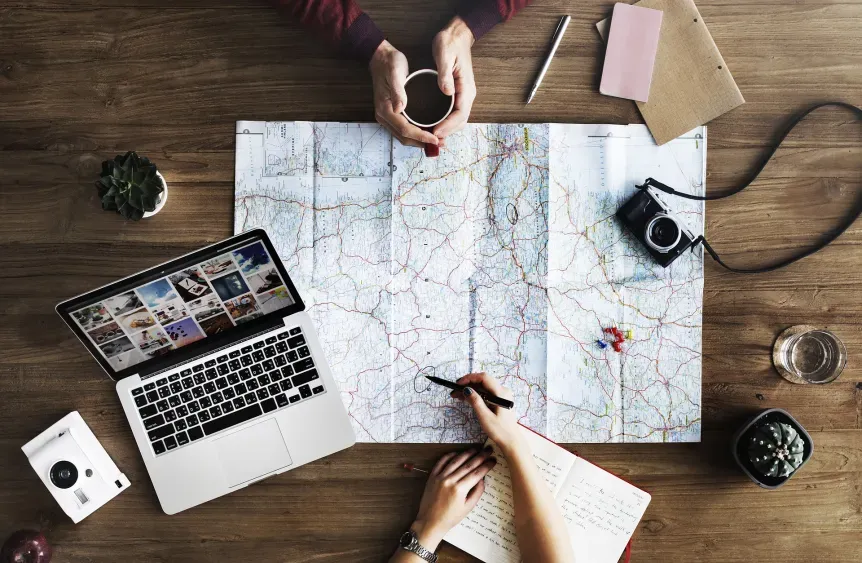
A wise saying dictates that failing to plan is planning to fail. As “spur-of-the-moment and ever-adventure-ready travelers,” we didn’t always subscribe to this, but in today’s climate, we’re inclined to agree. It’s like using a digital hot foil stamping machine—you can create something beautiful on the fly, but without proper setup and alignment, the results may be less than perfect. Similarly, spontaneous travel is still possible, but having your ducks in a row ensures you avoid any unpleasant surprises along the way.
Similarly, spontaneous travel still has its charm, but a bit of strategic preparation can mean the difference between a dream vacation and a logistical nightmare. In this era of ever-changing travel guidelines, planning your trip with the precision and foresight of a wedding planner is more important than ever.
Just as a wedding planner ensures every flower, timeline, and guest experience is perfectly coordinated, travelers, too, must consider every detail, from booking confirmations to backup plans, if they want smooth, memorable adventures. In this day and age, where uncertainties come with every step of traveling, it’s best to plan your travels just like planning a wedding: with advanced and up-to-the-minute detail.
Happiness effect
They say it’s the journey, not the destination. Or is it? Although lounging on a picturesque beach on a dream vacation is a sure way to feel happy and relaxed, you’d be surprised to learn that journey planning itself can immensely boost levels of happiness. A scientific study in the Netherlands published in the journal of Applied Research in Quality of Life, shows that the intention itself or the plan to go on a holiday makes vacationers to be almost as happy as the trip itself. The study compared vacationers to non-vacationers, and the former had a pre-trip mean happiness score of 2.25, while the latter had a score of 2.07. A statistically significant difference that proves that the act of expecting a leisure holiday boosts your happiness levels.
These findings have been confirmed in other similar studies. Research by the Institute for Applied Positive Research found that 97% of the respondents feel happier when they have a planned trip, 82% of them feel moderately to significantly happier, and 71% feel energized when they have a trip planned within the next six months.
Whether you’re ready to travel in the near future or a little farther down the road, don’t skimp on the trip planning, but rather savour it. Dare to think and dream about your next trip! Going through the travel planning process will not only save you some money or make your trip the best and safest it can be, but actually elevate your overall level of happiness before the journey even comes around. 🙂
Cost effectiveness and budget planning
Planning things in advance can make a real difference for your travel budget. Just take airfare, for example. Airlines apply dynamic pricing policie,s which elevate prices depending on the number of booked aircraft seats, which means that booking a flight well ahead of time allows you to save a good chunk of money. Something similar could happen with your accommodation costs.
Bear in mind, planning how to reach your destination is only one part of the trip planning process. You also need to plan your expenses at the destination, and also your return route. Also, don’t forget inner travel at the destination itself, whether it’s a bus, train, or even a boat or a Cessna plane. You have to consider the available schedules and how fares vary based on the timing of your booking and the travel date itself.
Beyond the cost side of things, the research stage of the planning process is where you explore different ways to experience your destination. Whether you prefer a hectic and packed trip that covers the destination from A-Z or if you’d rather just go with the flow, cruising around, planning will help you assess your options and get a realistic measure of how much each component of the trip might cost. Measure it up against your budget to get a practical vision of your potential trip, avoiding overspending and even disappointment.
Safety and well-being
One of the key elements of any trip is the safety of the journey and the destination itself. Unless you’re a “living-on-the-edge hyper-adventurous” traveller who throws all caution to the wind, you’ll want to have a trouble-free, effortless travel experience. Planning, and at least thinking through the major elements of your journey, will help you to avoid unwanted surprises.
Whether it’s health considerations, transit accessibility, your accommodations whereabouts, or the safety of the boat you’ll spend 4 hours on in choppy waters, there can be many considerations along the way to make or break your experience. Good preparation can play a significant role, tipping the scales towards a relaxing versus a stressful journey.
Why Planning Matters: A Travel Story from BagsAway’s co-founder
We’ll share a short story from one of our very co-founders’ trips to Greece. It was 2012, and Athens was charged with political tension, resulting in strikes, riots, rising crime, and a looming recession. Irina and her friend were debating on a destination to visit while on a trip to Israel, but couldn’t find a compromise, and despite some hesitation, eventually settled on Greece. Since airlines, hotels, and the travel industry were still promoting the destination, they figured it couldn’t be too bad and decided to go for it.
They quickly learned that their failure to plan led them to a conflict-ridden city where safety and security were questionable at best. Upon arriving in Athens, hotel staff advised them not to travel on foot past 6 pm and to use only certified taxis. Even during the day, mobile jails and fully armed police surrounded the main areas of the city. Omonia Square, usually a lively hub, had become a high-risk area, forcing them to stay on constant alert and eventually flee in broad daylight after drawing unwanted attention.
Had they taken the time to do proper research, they would have avoided the destination at that specific time. We are, however, happy to report Irina has been back since. Planning a little better the second time around, she discovered the magic and beauty of Athens and the Greek Islands in all their glory, and safety.
How to plan a trip in 2026: A 3-Step Approach
1. Make Your Travel Preferences Meet Current Reality and Travel Trends
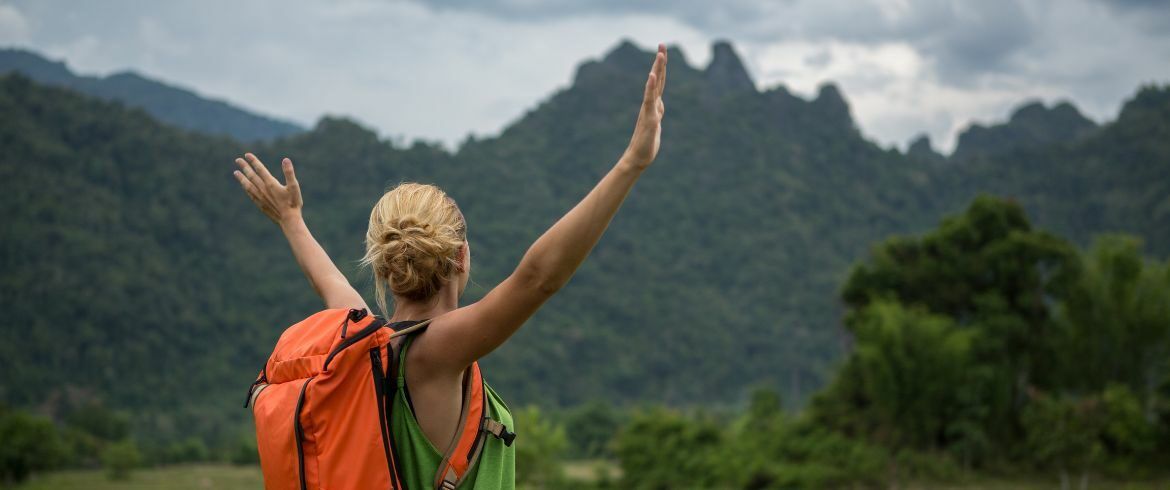
If this were a few years ago, we would encourage you to start your journey planning from within. No, we don’t mean spiritually speaking… In other words, ask yourself what type of journey might fulfill your wanderlust-driven dreams. What do your heart and soul desire? What destination is calling your name?!
Yes, those were simpler times, full of choices, limited only by time and budget. Whether you wanted to discover local hidden treasures across your country, conquer lands unknown, or revisit known and loved destinations, the world was your oyster. Travel on a whim or in advance, relax or get active, fly far, drive near, or sail away today, tomorrow, or months ahead—much was flexible and possible.
Travel has since evolved, shaped by global shifts, changing traveler priorities, and new ways of working and living. While borders are largely open again, travelers today tend to plan with greater awareness, flexibility, and intention. As we move through 2026, we continue to see how recent years have reshaped travel habits and preferences. Some interim reports and travel data shed light on what’s been happening so far. Many destinations that once relied heavily on international tourism have seen sustained interest in domestic and regional travel. This shift encouraged travelers to explore closer to home and rethink what meaningful travel looks like.
Airbnb’s real-time data provides a useful snapshot of current and emerging travel trends, highlighting several patterns that continue to influence how people travel today.
1. Family travel
Airbnb reported a rise in group travel, with families and close-knit groups choosing to travel together more often, valuing shared experiences and quality time. Family travel represents nearly one in five nights booked on Airbnb, growing about 15 % compared to the previous year, as families prioritized wider spaces, flexible stays, and value for money when planning vacations together — especially around major holiday periods.
This shift reflects a broader global trend: families now make up a substantial share of leisure trips, with many prioritizing meaningful experiences over material goods, seeking destinations that offer outdoor activities, cultural sites, and opportunities for relaxation and bonding.
2. Bigger space
As group and family travel continues to grow, travelers increasingly prefer renting entire homes rather than booking traditional hotels. Larger properties provide more room to stay together, added privacy, shared living areas, and greater flexibility, making them better suited for longer stays and multi-generational trips.
3. Local and regional travel
Staycations, countryside retreats, rural destinations, nature-based getaways, and places off the beaten path have continued to attract travelers, becoming consistent preferences rather than occasional alternatives, as people seek quieter environments, shorter travel distances, and more meaningful connections with local surroundings.
4. Last-minute bookings
It can be difficult to predict what might happen from one day to the next, let alone weeks or months ahead. You may plan a trip to a country that is welcoming international travel and still face sudden changes that throw off your plans. For this reason, booking travel closer to your departure date is often the safest option, either for a shorter stay or, in some cases, a deliberately longer one.
Booking a medium-term stay can carry more risk, as unexpected changes may limit your return options. A short stay is easier to manage, as it’s generally possible to anticipate what will happen in the near term. A longer stay, on the other hand, is a conscious choice that offers more flexibility over time, allowing you to adapt, process new information, and plan your return more comfortably.
5. Work remotely and live anywhere
Airbnb has described this trend as “live anywhere.” A significant share of travelers say they like the idea of relocating temporarily as part of a remote work setup, blending work and travel more smoothly than ever before.
Remote Work Possiblitles
The remote work trend began before, but has grown significantly by 2026. If you do online research, you will notice that many countries are now mentioned as popular remote work or digital nomad destinations. Some of the most frequently cited examples include Croatia, Czech Republic, Estonia, Georgia, Germany, Iceland, Norway, Portugal, Spain, Anguilla, Antigua & Barbuda, Barbados, Bermuda, Cayman Islands, Costa Rica, Mexico, and Dubai (UAE).
Some countries offer special incentives to attract remote workers. These perks can include vouchers or discounts for tourist attractions, coworking spaces, and short-stay hotel accommodation to generate interest in the destination and support the local economy.
However, as you may expect, there is no such thing as a free lunch. To be eligible for a long-term remote work or digital nomad visa, you usually need to meet certain conditions. For example, many countries set a minimum income requirement or require proof of financial means.
Croatia and Portugal require sufficient monthly income based on local visa rules.
Being too focused only on countries that actively promote remote work might distract you from other options. For instance, many countries allow travelers, including U.S. or Canadian passport holders, to stay visa-free for up to about 90 days for tourism purposes — a travel opportunity unrelated to digital nomad visas.
This means you could work remotely during those stays if your home country’s rules and the destination’s tourist rules permit it. Always verify visa-free entry durations and conditions with official government resources.
For longer stays, you should first check if your desired destination accepts travellers from your country, then contact the embassy or consulate of that destination, as well as its Ministry or Department of Foreign Affairs. They will guide you through the long-term visa options, requirements, and application processes.
2. Determine where to travel (from your country)
What countries and borders are open for travel? Where can I go?!
First things first, check whether your intended destination is welcoming international travelers, specifically from your country of origin. Though keep in mind that travel requirements can change, and keeping up with these updates requires regular attention. A country’s entry rules today may look different tomorrow, making it important to verify official guidance close to your departure date.
Beyond border access, review the entry requirements for each destination. These may include visa policies, length of permitted stay, passport validity rules, proof of onward travel, or evidence of sufficient funds. Some countries allow visa-free entry for short stays, while others require advance applications, electronic travel authorizations, or visas on arrival. Processing times and requirements can vary widely, so early research is essential.
It’s also wise to check whether additional documentation is required upon arrival, such as health declarations, travel insurance coverage, or registration with local authorities. Finally, don’t forget to review re-entry requirements for your home country to ensure a smooth return. Staying informed and planning ahead will help you avoid last-minute surprises and make more confident travel decisions.
Choose countries that align with both your budget and interests, balancing accommodation costs, daily expenses, activities, climate, culture, and experiences to ensure the destination matches your travel style and expectations.
3. Choose what types of travel and experiences you want

In 2026, travel is less about volume and more about intention. Flexible work, rising costs, sustainability concerns, and experience-driven demand mean travelers benefit from choosing travel styles that align with their goals, values, energy, and lifestyle. Selecting the right travel type helps maximize satisfaction while minimizing friction and burnout.
Wellness-focused getaways
Wellness travel emphasizes rest, mental health, and physical recovery through retreats, nature immersion, spa experiences, and slower itineraries. Travelers increasingly prioritize balance, prevention, and well-being as part of their overall lifestyle, not just a vacation add-on. Wellness-focused trips are best if you're looking for a refreshing lifestyle through travel. Along wellness-focused tourism, there are many emerging destinations in health tourism as well; you may consider that too.
Digital nomad + remote-work travel
Remote-work travel blends professional responsibilities with location flexibility, allowing longer stays, deeper cultural immersion, and routine-based exploration. This travel type supports productivity while enabling lifestyle design beyond traditional office-centered living. There are many destinations that are perfect for a nomadic lifestyle while growing your career and traveling the world at the same time.
Culinary Tourism
Culinary travel focuses on local food systems, traditional cooking, markets, and dining as a gateway to culture. Travelers seek authentic flavors, regional identity, and storytelling through food experiences rather than standardized dining. This type of travel allows deeper cultural connection, supporting local communities while discovering a destination through its most personal and memorable flavors.
Sustainable Travel
Sustainable travel prioritizes low-impact transportation, responsible accommodations, and community-focused experiences. Travelers aim to reduce environmental footprints while supporting local economies and preserving cultural and natural heritage.
Travel planning advice and tips
1. Learn aboout flexible cancellation and policies of Airlines, hotels, and Airbnbs
We have now already in a more normal travel environment, flexibility is a highly valued booking attribute that you should seek. When you book your flight, hotel, car rental or Airbnb, check the cancelation and postponement policies. More flexible policies will save you trouble going forward.
To find out more on this topic:
-
you can read The Points Guy and Forbes for an overview of airline policies;
-
get a list of the web pages of the major airlines offering travel flexibility by visiting Google’s travel resource section or Kayak’s airlines resource page; - or go directly to the web pages of the few potential airlines that you might use, if they offer flexible policies this is something that will be visible even on their home page in most cases.
The same applies for hotels and Airbnb properties. Each hotel chain has its own cancelation and postponement policy and many of them provide flexibility So if you have a preferred choice of hotel brand be sure to read what it says about it. In some cases it would be best if you contact the hotel directly to understand the latest cancellation terms.
When it comes to Airbnb properties, the policy is more certain and standardized. You can find all the essential information and description of available levels and types of cancelation by going to Airbnb’s website.
2. Get the great travel deals and rates
In 2026, global hotel rates are expected to remain generally stable with modest growth, rather than deep discounts, as average daily rates increase modestly year-over-year due to ongoing demand and limited new supply. Similarly, recent forecasts suggest moderate hotel pricing growth across regions in 2026, with increases in major cities like New York and Toronto and more constrained rates elsewhere.
At the same time, there are still deals to be found — especially for domestic and budget-friendly travel. In the U.S., average hotel and motel room rates were down about 5.7 % year-over-year as of late 2025, presenting opportunities for savvy travellers. Flight pricing patterns show modest fluctuations, with global average ticket prices expected to edge up slightly in 2026 after a small dip in 2025.
When it comes to airfare and travel packages, many travel experts recommend planning ahead or using price‐tracking tools to secure deals before prices rise again — for example, booking flights early and watching for price drops or bundling flights with accommodation. Seasonal bargains and last-minute promotions still appear periodically, especially for less busy destinations or shoulder seasons, giving thrifty travellers chances to capitalize on lower rates.
While passenger volumes and demand are at healthy levels, combining flexibility (refundable bookings, flexible dates) with strategic planning remains one of the best ways to lock in attractive rates for hotels and flights as 2026 unfolds.
3. Plan around what’s happening around the world

For many travelers, timing a trip around major global events adds an extra layer of excitement. Others prefer visiting destinations during quieter periods, when crowds are thinner and prices are more manageable. Many travelers fall somewhere in between, blending cultural highlights with slower exploration. Whatever your travel style, understanding what’s happening throughout the year allows you to plan more intentionally.
In 2026, the global calendar offers several standout events that may influence travel decisions. The Winter Olympics in Milan and Cortina d’Ampezzo will bring international attention to northern Italy in February with alpine and ice-sport competitions. The FIFA World Cup hosted across the United States, Canada, and Mexico in June and July will transform multiple cities into global gathering points with matches, fan festivals, and cultural celebrations.
Later in the year, a total solar eclipse visible across parts of northern Spain, Iceland, and Greenland will attract astronomers and travelers alike as a rare natural spectacle. In Asia, the Summer Asian Games in Nagoya will bring together thousands of athletes and showcase Japanese culture and innovation from September into early October.
Travel experts also highlight the broader travel landscape for 2026, noting how such events help shape where adventurous and cultural travelers choose to go, and contribute to destination popularity lists each year (as seen in Travel + Leisure’s 2026 travel inspiration coverage)
Beyond headline events, seasonal moments, such as cherry blossom season in Japan, summer cultural festivals across Europe, Oktoberfest in Germany, or wildlife migrations in Africa and South America, can play an equally important role in shaping your itinerary. Being aware of these cycles helps you decide which trips to prioritize now and which to plan for later, making it easier to balance experiences and even fit multiple journeys into a single year.
Prepare for your trip in 2026, step by step

In the previous sections, we presented you with the big picture about travel in 2026, highlighting key trends, evolving traveler preferences, and major events shaping the year ahead. Now it’s time to take a more practical view and focus on the most important steps for your next trip. From choosing the right destination and timing your travel to budgeting, booking, and staying flexible, the following points will help you turn insights into clear, actionable decisions for planning your journey.
Passport: Take your passport and blow the dust off 😊. Don’t forget to double-check your passport expiry date (if you haven’t traveled in almost a year, it might be time to renew!).
Countries open for travel: If all is good, check which countries borders are open for travel and their respective entry requirements. Check the entry requirements for your destination. Don’t forget to check your own home country’s travel policies to other countries.
Budget: Do preliminary research to get a ballpark estimation of the budget needed for the trip.
Booking: Book flight and accommodation once you choose your destination. Don’t forget to look for and to use flexible cancellation policies.
Visa: Do you need to apply for a visa for international travel? If so, check how many blank pages your passport has. If you plan a bucket list trip and want to go to some more exotic destination, for example, Africa, you may need more blank pages than expected. Check Tripadvisor to see what fellow travelers have to say about it. Apply for a visa (in most cases visa application requires accommodation and/or flight to be booked before).
Vaccination: Should you consider getting vaccinated against yellow fever, malaria, or other diseases? There are currently no mandatory vaccinations required, only recommended for specific destinations. However, health regulations and vaccination recommendations may change over time, so it’s important to verify official guidance before departure.
Health documentation and tests: This is a pretty critical item on the checklist so be sure to check whether you need to provide any health documentation or test results to enter the country or to cross international borders on your route. These policies and requirements can change, so this is something you will need to pay especially close attention to days ahead of your departure. Keep your hand on the pulse and be sure to do a little research before your trip.
Transportation: Think about what happens once you cross the border or once you land at the airport. Do you need connecting transportation, a train, bus, car rental, taxi? If yes, book them on time before you arrive. When booking a car rental be aware that they also provide free cancelation possibility. Each individual provider may differ, be sure to check them out, Kayak created a nice car rental resource page for this purpose.
Driver permit: If you want to set yourself up for remote work or want a cross country experience you may need to drive a car (own or rented). Check either with your car rental provider or the local transport authority whether you need an International Driver Permit or not. It varies from country to country.
Personal health kit: Don’t forget to pack your bags with a basic personal health kit: masks if needed, hand sanitizers, basic medication, and vitamins, (C, D, B, and the rest of the alphabet!). Echinacea, Tylenol, and a thermometer could also serve as useful for a healthy and safe trip!
Connectivity & Internet
It’s something all Western countries and even most developing countries have comes to rely on. When traveling this mobile safety net becomes even more critical. You may want to buy a prepaid SIM card with an included mobile internet package so that you can be available anywhere you go, at least via the internet. It can also save you from expensive roaming charges.
The first place to refer to is your cell carrier’s website or alternatively research cheap local connectivity options. For instance, Thailand is a destination that caters to travel mobility needs with unlimited internet plans that will satisfy all your connectivity needs along the journey. Though depending on how remote the destination you’re traveling to it may be a good idea to research the quality of the available local network. You do not want to end up with a cheap “solution” that simply doesn’t do its job, which is especially important if you work remotely. You’ll need a reliable quality connection and a backup plan to keep you connected and available for your professional commitments.
Power supply & power backup
Connectivity on the electrical grid. Depending on the type of your travel, sometimes you may have a need to charge your phone while you are on the move. A power bank will be handy in such situations. Don’t forget also the need for a travel power plug converter if the voltage in the country differs from yours at home. If it’s a critical tool for you, try to buy one before your trip. A local electronics shop can help you, if not, you can easily order it online.
Finances & Budgeting
Before you go it’s a good idea to manage and plan your finances. If you can acquire the foreign currency at your local bank prior to your trip, it would likely be the optimal way to go. It will also give you confidence in the exchange rate, avoiding potentially getting ripped off by small currency traders at your destination. If you can’t buy the foreign currency before your trip for one reason or another you’ll need to plan to make a bank or a trusted exchange office one of your first stops.
An ATM is also an option, but it’s likely going to cost you extra, extra, but hey, that’s just the price of convenience, right?
It’s obviously wise to plan and budget ahead as to how much cash you’ll bring along and how much extra you’ll have in your bank (credit/debit) in case of emergency. Make sure you’re in the know on your daily charge limits, whether your card charges a foreign transaction fee, and the card status abroad, ensuring your card won’t be declined at the destination to avoid unnecessary stress.”
Travel Apps Apps
Travel with confidence using one of the best tech trip-buddies available – your smartphone! Load it with apps useful for your trip. Google Maps is one obvious choice, along with Uber or Lyft and other “app staples”. Yet, the iTunes and Google Play stores are packed with exciting, useful, and out of the box travel solution to kick-up your trip t0 the next level.
BagsAway, Packr, Lyfx, Adventure IO, Roadtrippers, Trippit, and Couchsurfing are just a few worth checking out. We have no doubt you have your own go to travel apps, we’d love to hear from you because we are ever eager to learn!
Concluding thoughts
Although some travelers never stopped crossing borders in recent years, it’s not inaccurate to say that spontaneous, on-the-whim travel has become less accessible than before. In 2026, travel is shaped by greater awareness — of timing, pricing, global events, and destination dynamics — making planning a more important part of the journey itself.
Yet the motivation to explore remains strong. For those longing for the excitement of the unknown and the chance encounters with people from all corners of the world, travel still offers powerful opportunities. If your thirst for exotic, authentic, and unfiltered experiences in dream destinations outweighs hesitation, the path forward is clear: travel with intention, flexibility, and confidence.
With better information, smarter tools, and a more thoughtful approach, moving the dream closer to reality is not only possible, it’s already happening for travelers willing to plan ahead and embrace the changing nature of global travel.
One more thing to add to your travel checklist: luggage storage. BagsAway lets you book a secure drop-off spot before you even land. Browse cities.
BagsAway Team
Travel experts helping you explore the world bag-free.