







The Fillmore Miami Beach at a glance
The Fillmore Miami Beach is a live-music and entertainment theatre in South Beach. You'll see concerts, Latin music, comedy and speaker events on its calendar. How many people it holds depends on the source and on how the room is laid out: listed capacity runs from roughly 2,400 to 2,700.
Inside, it's a classic mid-century theatre with a rock-and-roll streak. It has gothic-style chandeliers, serious sound, and three lobbies with 13 bars between them.
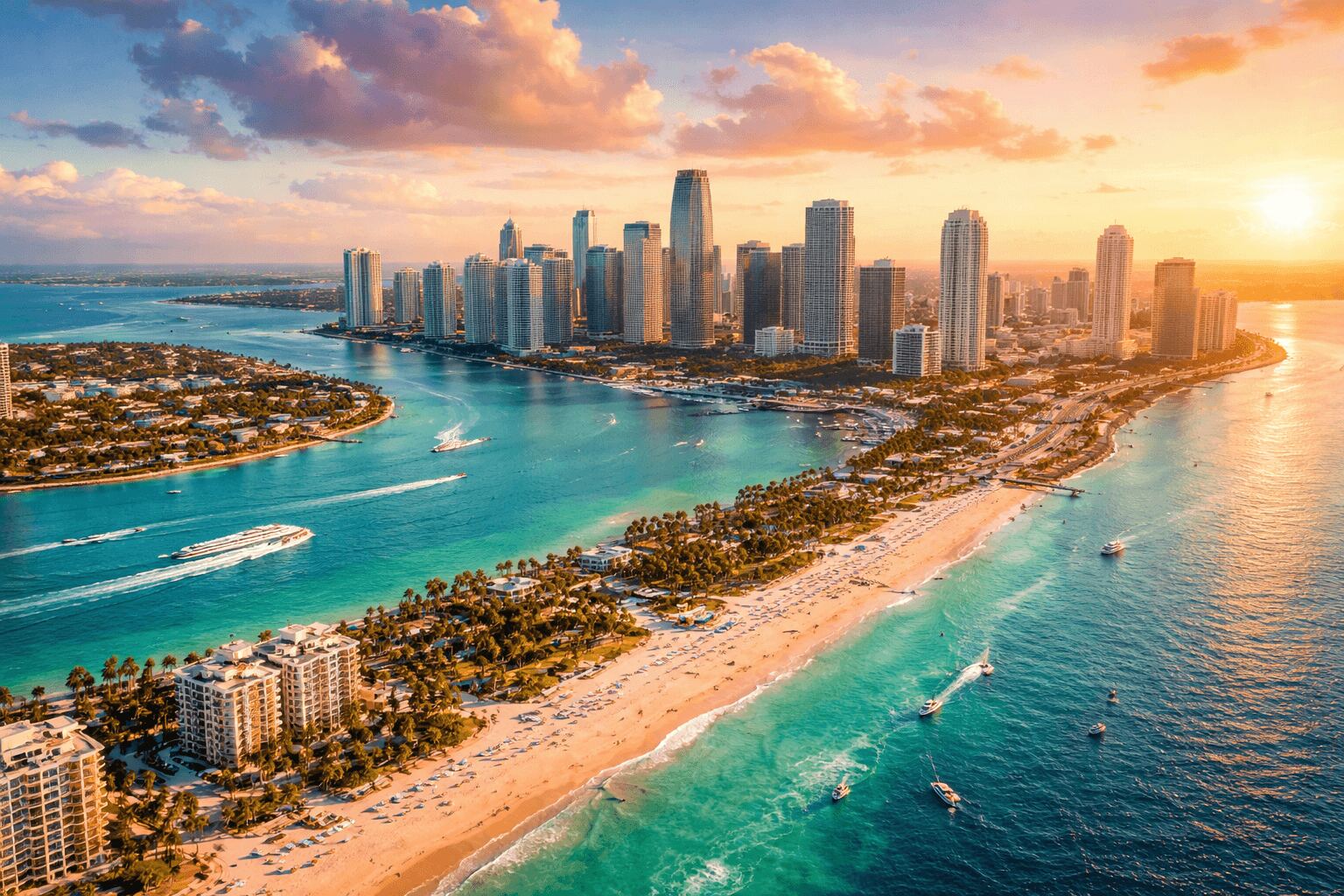
The outside is Art Deco, which is what you'd hope for on Miami Beach.
Where it is and how to get there
You'll find it at 1700 Washington Avenue, Miami Beach, right beside the Miami Beach Convention Center. From Miami International Airport it's about 9 miles, give or take the route over the causeway.
According to one guide, the Miami Beach Airport Express (Route 150) runs to Collins Avenue at 17th Street. Get off there, walk two blocks east toward the beach, then head south on Washington Avenue. A venue guide says the South Beach Trolley also serves the area, with stops at Washington Avenue and 17th Street and at 17th Street and Convention Center Drive.
Check current routes and times before you rely on either.
Doors, the box office and getting in
Doors times vary by show, so go by your ticket.
The venue asks guests to arrive early to give themselves time for the queue. Everyone gets searched on the way in, with a wand, a walk-through metal detector or a pat-down, and you may be asked to empty your pockets.
The box office is listed as open Tuesdays and Thursdays from 11am to 6pm. On show days it opens two hours before door time and closes once the headliner takes the stage.
Tips for first-time visitors

Leave the cash behind, because The Fillmore is fully cashless. Bring a card or your phone. There's no food service inside, though there are full-service bars across the lobbies. On the first floor you'll find large water jug stations with cups, and there are water fountains around the building.
A general-admission ticket doesn't get you an assigned seat. Standing and seated general-admission areas fill on a first-come basis, which gives you one more reason to get there early.
Then there's re-entry. One fan guide says the venue doesn't allow exit and re-entry, so bring what you need before you go in. That isn't from the venue itself, so confirm it with the box office.
Parking near The Fillmore Miami Beach
The Fillmore doesn't operate its own parking, and street parking nearby is limited.
Instead, the venue sends drivers to the municipal garage at 17th Street and Convention Center Drive, one block away. Valet is offered at the front drive for most shows. At the garage, follow the signs and check the posted payment instructions. The Convention Center is next door, so when there's a big event nearby it's sensible to allow extra time.
Accessibility and comfort
The building is wheelchair accessible, and the municipal garage has accessible spaces and elevators. Need an interpreter? Request one from the box office by email at least two weeks before the show.
For questions about seating or access at a specific show, contact the venue before the day. Staff at the entrance can also point you the right way.
A building with several names

The venue says it began in 1950 as the Miami Beach Municipal Auditorium. Another source gives 1957, so don't take the exact year as settled. Later it was the Miami Beach Auditorium, then the Miami Beach Theater of the Performing Arts, and from 1987 to 2007 it carried the name of a television star. In 2007 it became The Fillmore Miami Beach.
The old name never quite left, and tickets, marquees and some map listings still mention it.
It's one building with a long memory.
Two odd facts about the room
In the 1960s the auditorium doubled as a television studio, hosting tapings and pageants. A variety show moved in in 1964 after Miami Beach invited it to film there, and in 1966 it was shot in colour on videotape. Each episode opened with a boat speeding toward the Miami Beach shore.
The rock-venue makeover came later. In 2007 the room joined the Fillmore family of theatres, modelled on the one in San Francisco. Because of those modern renovations, Live Nation says it isn't a designated historic landmark, Art Deco exterior and all.